Eco-friendly rakhis: what really goes back to the earth
Seed rakhis, cotton threads, paper beads and plain mauli. What breaks down and what doesn't, which ones you can't post abroad, and what to do with a rakhi after the festival.
Short answer
- The most eco-friendly rakhi is the simplest one: cotton or mauli thread with a few wooden, clay or paper beads.
- Seed rakhis can be planted after the festival, but you cannot post them to Australia or New Zealand, and many other countries check seeds at the border.
- Avoid foam, glitter and plastic stones if you want the rakhi to break down. Keep those rakhis rather than putting them in rivers.
"Eco-friendly" is now one of the first words people look for when they buy a rakhi. Which is good. But the word is used loosely, so here is what it actually means from the making side.
A rakhi is small. The environmental cost of one rakhi is tiny. The issue is the hundreds of millions of them, most of which end up in rivers, ponds and drains a week after the festival, because the tradition says to put them in flowing water. A thread of cotton in a river is fine. A foam disc with glitter and plastic stones is not.
What makes a rakhi eco-friendly
Look at three things: the thread, the decoration, and the glue.
- Thread. Cotton, mauli (kalava) and pure silk break down. Most "resham" sold in the market is actually viscose or polyester. Viscose is plant-based and breaks down slowly. Polyester doesn't.
- Decoration. Wooden beads, clay beads, rudraksha, paper, dried flowers and fabric are all natural. Plastic pearls, acrylic stones, foam sheets and glitter are not.
- Glue and backing. Most rakhis have a small felt or card disc on the back, with the decoration glued on. Felt is usually polyester. A rakhi where the beads are stitched onto the thread, with no backing at all, is the cleanest.
One honest point: a rakhi made with zari or metal findings will not break down in a river either, but it will last for years. Many families keep those in a box, which is its own kind of sustainable.
The main types, compared
| Type | Made of | Breaks down? | Good to know |
|---|---|---|---|
| Mauli or kalava rakhi | Red and yellow cotton thread | Yes | The oldest kind of rakhi. Cheap, simple, always correct. |
| Cotton thread with wooden or clay beads | Cotton, wood, terracotta | Mostly | Check that the beads are threaded, not glued to foam. |
| Seed rakhi (plantable) | Seed paper or a seed ball on cotton | Yes, and it grows | Not allowed into Australia or New Zealand, and checked at many borders. Fine within India. |
| Paper or quilling rakhi | Paper, natural colour | Yes | Lovely for kids to make. Avoid in the rain. |
| Rudraksha rakhi | Rudraksha bead on thread | Mostly | Many brothers keep the bead afterwards. |
| Silver rakhi | Silver, sometimes with thread | No, but lasts | Kept for years, often worn as a bracelet. |
| Foam, glitter and plastic stone rakhi | Foam, polyester, acrylic | No | Keep it, don't put it in water. |
For a fuller tour of designs, see our guide to types of rakhi.
Seed rakhis: the good, and the catch
Seed rakhis have been one of the real trends of the last few years, along with rakhis made with coffee beans and elaichi. The idea is lovely: after the festival, your brother soaks the rakhi and plants it, and something grows. Tulsi, marigold, basil and tomato are common.
Three things to know before you order one:
- Don't post it abroad without checking. Australia's Department of Agriculture names rakhi threads made with seeds or flowers among the items that pose a biosecurity risk, and says seeds are the item they confiscate most at mail centres. New Zealand also screens parcels for seeds. If your brother lives there, choose a cotton or silver rakhi instead. We cover this in detail in our guide to sending rakhis to Australia and New Zealand.
- Plant it soon. Seeds in a rakhi are not stored the way seed packets are. If the rakhi sits in a drawer until winter, the seeds may not come up.
- Keep it dry until then. Rakhi is a monsoon festival. A seed rakhi left in a damp bag can start to sprout or go mouldy.
Make one at home
The simplest eco-friendly rakhi is the one you make yourself. Children love this, and the result is often more treasured than anything bought.
- Take a length of mauli or cotton thread, about 40 to 45 cm, so there is enough to go around the wrist and tie.
- Thread on a few wooden or clay beads, or a single rudraksha.
- For a centre piece, cut a small flower from thick paper or old fabric, or use a dried marigold or a small shell. Stitch it on with a needle rather than gluing.
- Tie a small knot on each side of the centre piece so it doesn't slide around.
What to do with a rakhi after the festival
Tradition says the rakhi should not be thrown away. Most families do one of these:
- Natural rakhis (cotton, mauli, paper, seed): put them at the base of a tree or a tulsi plant, or into a pot of soil. This keeps the respect of returning it to nature without adding anything to a river.
- Seed rakhis: soak for a few hours and plant.
- Plastic, foam or glitter rakhis: keep them. Many families keep a small box of every rakhi from every year. Children love opening it later.
- Silver and metal rakhis: keep, or have them turned into a bracelet or a charm.
If you would like to put the rakhi in water, as your family does, choose a cotton or mauli rakhi for that purpose and keep the decorative one.
Packaging matters too
A thread rakhi often arrives in more plastic than the rakhi itself weighs. Within India, a paper envelope and a piece of card are enough to keep a flat rakhi safe. For international courier, a protective layer makes sense, because the parcel goes through several hands and the monsoon. If you are buying from a local shop, ask for paper. Most will give it.
Frequently asked questions
A simple cotton or mauli thread rakhi with natural beads such as wood, clay or rudraksha, stitched rather than glued onto foam. Seed and paper rakhis are also good choices within India.
No. Australia's Department of Agriculture lists rakhi threads made with seeds or flowers as a biosecurity risk, and seeds are among the items most often confiscated at its mail centres. Send a cotton or silver rakhi instead.
Soak the seed part in water for a few hours, place it just under the surface in a pot of soil, keep it damp and in light. Plant it soon after the festival, because seeds in a rakhi may not stay viable for long.
Natural rakhis can go at the base of a tree or tulsi plant or into soil. Rakhis with plastic, foam or glitter are best kept in a box rather than put in rivers.
Picked for this guide
From our family shops in Jaipur. Prices were checked when we picked them; the shop page always shows today's price.
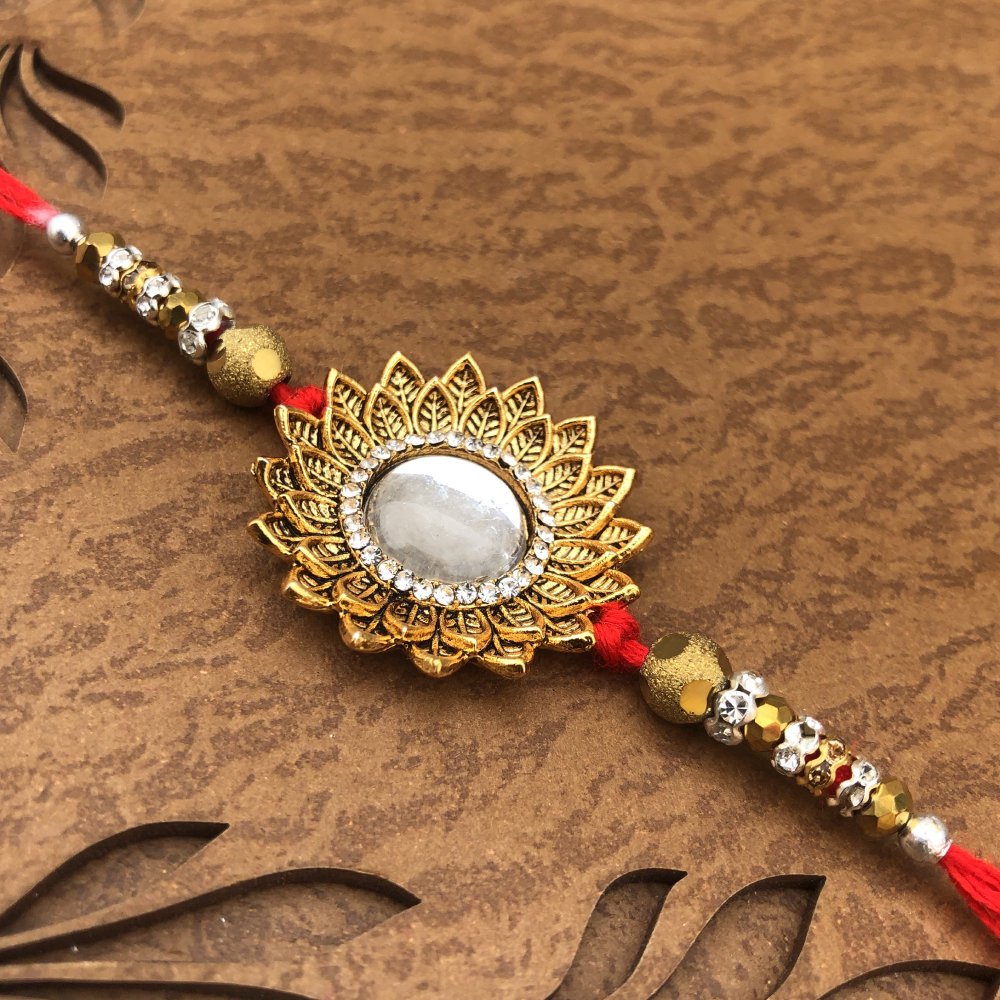 Designer rakhi
32% off
rakhiz.com
Stunning Bond of Love Sun Stone Rakhi
₹210
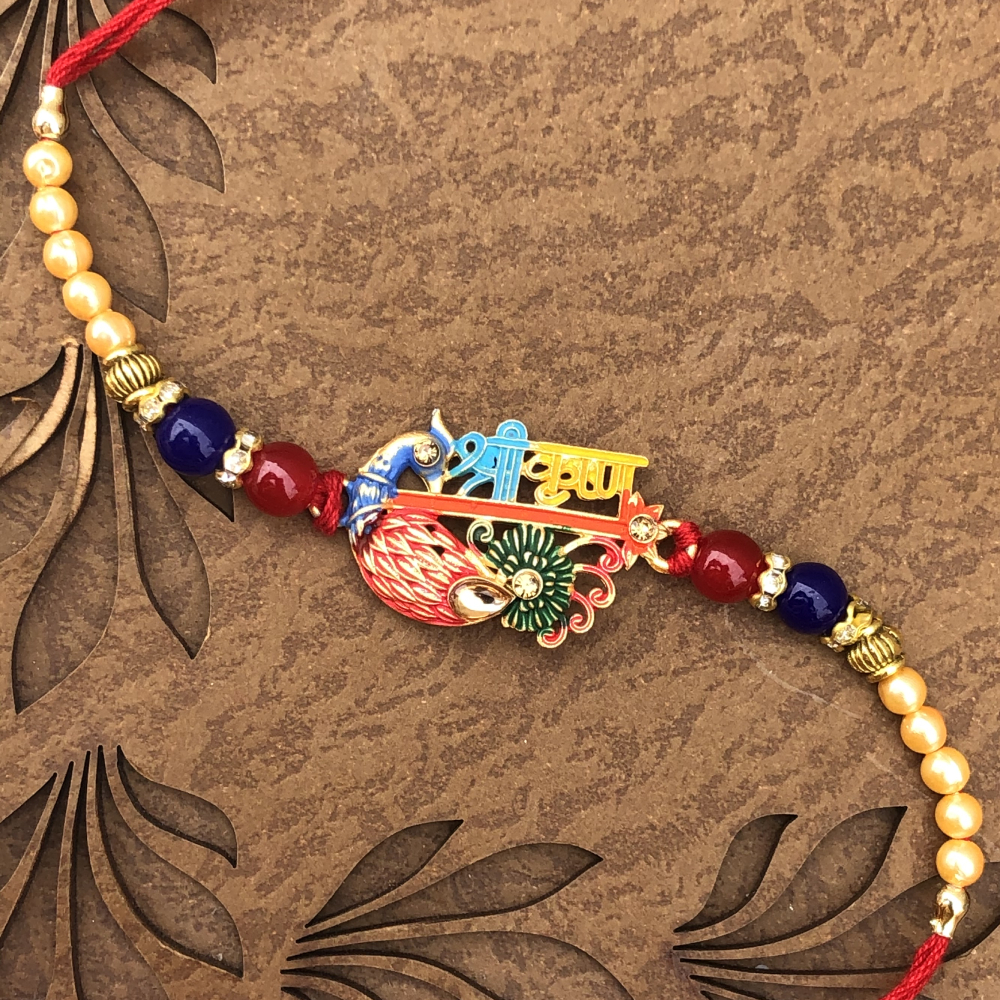 Auspicious rakhi
36% off
rakhiz.com
Auspicious Krishna and Peacock Designer Rakhi
₹180
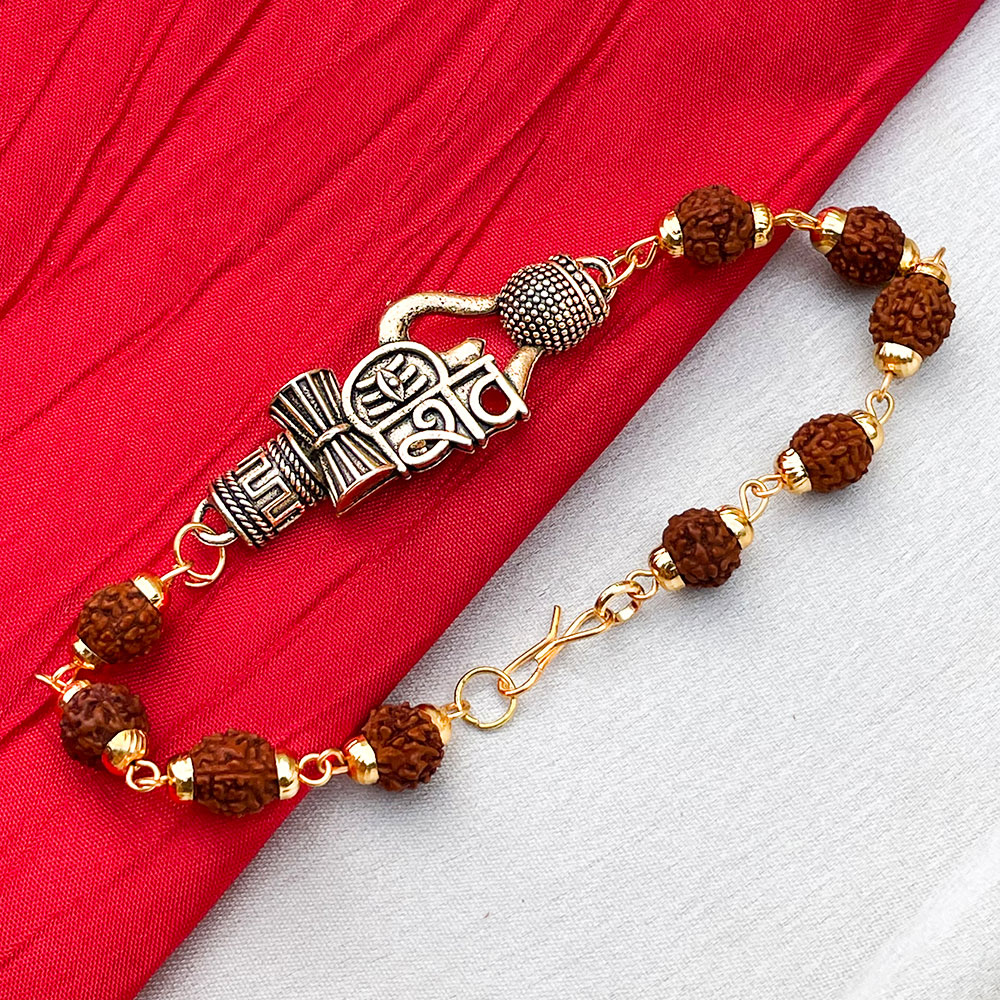 Bracelet rakhi
28% off
rakhiz.com
Rudraksh Shiva Symbol Bracelet Rakhi for Brother
₹260
 Mulmul saree
46% off
theblockart.com
Sunset Bloom Hand Block Cotton Saree, Yellow and Rani Pink
₹1,190
Thank you. Your answer helps us make this guide better.