How to tell a well-made rakhi: a maker's checklist
Thread length, colour that runs in the rain, stones that fall off on day one, clasps that pinch. What we check in our own workshop, so you can check it in any shop.
Short answer
- The thread should be at least 35 to 40 cm end to end, with sealed or knotted tips.
- Press the stones and beads gently. If anything moves, it will fall off.
- Rub a wet fingertip on the thread. If colour comes off, it will stain his wrist and shirt cuff in the rain.
- For bracelet rakhis, open and close the clasp a few times, and check for sharp edges.
In a rakhi workshop, the last step is not a machine. It is a person who picks up each rakhi, turns it over, tugs at it, and either boxes it or puts it aside. The rejects tell you exactly what goes wrong. None of it is secret, and you can check all of it in a shop in a minute, or from good photos online.
1. Thread length, and the tips
The most common complaint about rakhis bought in a hurry is simple: the thread was too short. Brothers' wrists come in all sizes, and the knot needs extra length.
- Look for at least 35 to 40 cm of thread end to end for an adult. For a larger wrist, or if the rakhi will be tied with three knots, more is better.
- Check the ends. Good rakhis have knotted, tasselled or heat-sealed tips. Loose ends unravel, and by evening the rakhi is a mess of thread.
- Some rakhis have a sliding knot so the length can be adjusted. These are easy for a brother to tie on himself, which matters if he is abroad.
2. Stones, beads and the backing
Turn the rakhi over. Most decorative rakhis have a small felt or card backing, and the centre piece is glued on top. That is normal. What matters is how well.
- Press every stone lightly with your thumb. If any of them shift, they will fall off on the day.
- Look at the edges of the backing. Glue that has spread and dried shiny around the edge is a sign of a rushed job.
- Stitched is better than glued. On better rakhis, the centre is stitched to the thread with a needle, so even if the glue gives up in the heat, nothing comes loose.
- Check the weight. A heavy centre piece on a thin thread will flip over all day and show its back.
3. Colour fastness: the monsoon test
Rakhi falls in Shravan, the heart of the monsoon. Wrists get wet, people sweat, and cheaply dyed thread bleeds. A white shirt cuff turned pink is a very common Rakhi-day story.
The test is easy: touch the thread with a slightly wet fingertip and rub. If colour comes off on your finger, it will come off on him. Red and maroon threads are the most likely to bleed. Mauli is often dyed with cheaper colours too, so it is worth checking even the simple ones.
4. For bracelet and silver rakhis
Bracelet rakhis have become very popular, especially with brothers who don't want something that looks festive at the office. They are also what many sisters choose for brothers who will keep wearing it. A few extra checks:
- The clasp. Open and close it five times. A lobster clasp should spring back firmly. A magnetic clasp should not come off with a light tug.
- Edges. Run a finger along the inside. Any rough metal edge will scratch the wrist by evening.
- Adjustability. A fixed-size bracelet has to fit. Ask for the length in centimetres and compare it with his watch strap.
- Silver. A real silver rakhi should be hallmarked or come with a purity note. Silver-coloured is not silver.
5. For kids' rakhis
Kids' rakhis need different checks: no small parts that can come off for very young children, no sharp points, and care with any rakhi that has a battery for lights or music. We wrote a separate safety guide for kids' rakhis.
6. If it has to travel
A rakhi that looks perfect in the shop can arrive crushed. If you are posting or couriering it:
- Choose a rakhi that comes in a rigid box, not just a plastic sleeve.
- Avoid rakhis with tall 3D centre pieces for long journeys. Flat designs travel better.
- If you are adding roli and chawal, seal them in a small pouch. Loose roli in an envelope turns everything red.
- Check the destination country's rules. Seed rakhis and sweets are a problem for some countries. Our guides for the USA, UK and Canada, Australia and New Zealand and the Gulf cover the details.
7. Price is not the whole story
A simple mauli rakhi for twenty rupees can be perfectly made. An expensive designer piece can have stones falling off. What you are paying for in a higher-priced rakhi is usually materials (silver, real stones, pure silk) and time (stitching rather than gluing). Both are worth paying for if your brother will keep it. If it is coming off the same evening, a well-made simple rakhi is the smarter buy.
A one-minute shop check
- Stretch the thread along your forearm. Is it long enough?
- Check the tips. Knotted or sealed?
- Press the stones. Does anything move?
- Rub the thread with a wet finger. Any colour?
- Turn it over. Neat back, or glue everywhere?
- For bracelets: open and close the clasp, feel the inside edge.
If it passes all six, it will last the day, and very likely the year.
Frequently asked questions
For an adult, look for at least 35 to 40 cm of thread end to end, so it can go around the wrist and still be knotted comfortably. Larger wrists need more.
Touch the thread with a slightly wet fingertip and rub. If colour comes off on your finger, it will stain the wrist and shirt cuff, especially in monsoon weather on Rakhi.
Usually, yes. Glue can soften in heat and humidity, while a centre piece stitched onto the thread stays on even if the glue fails.
A clasp that closes firmly every time, no rough edges on the inside, an adjustable or correctly sized length, and a hallmark or purity note if it is sold as silver.
Picked for this guide
From our family shops in Jaipur. Prices were checked when we picked them; the shop page always shows today's price.
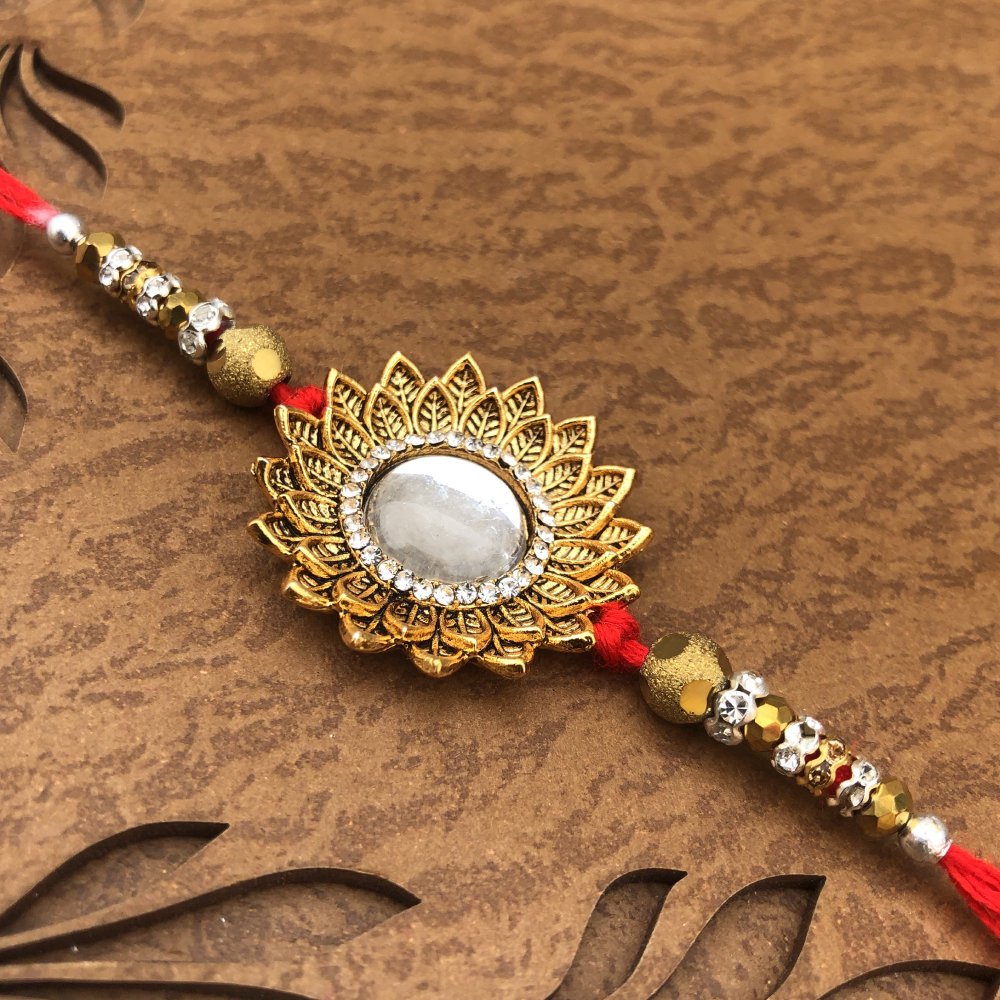 Designer rakhi
32% off
rakhiz.com
Stunning Bond of Love Sun Stone Rakhi
₹210
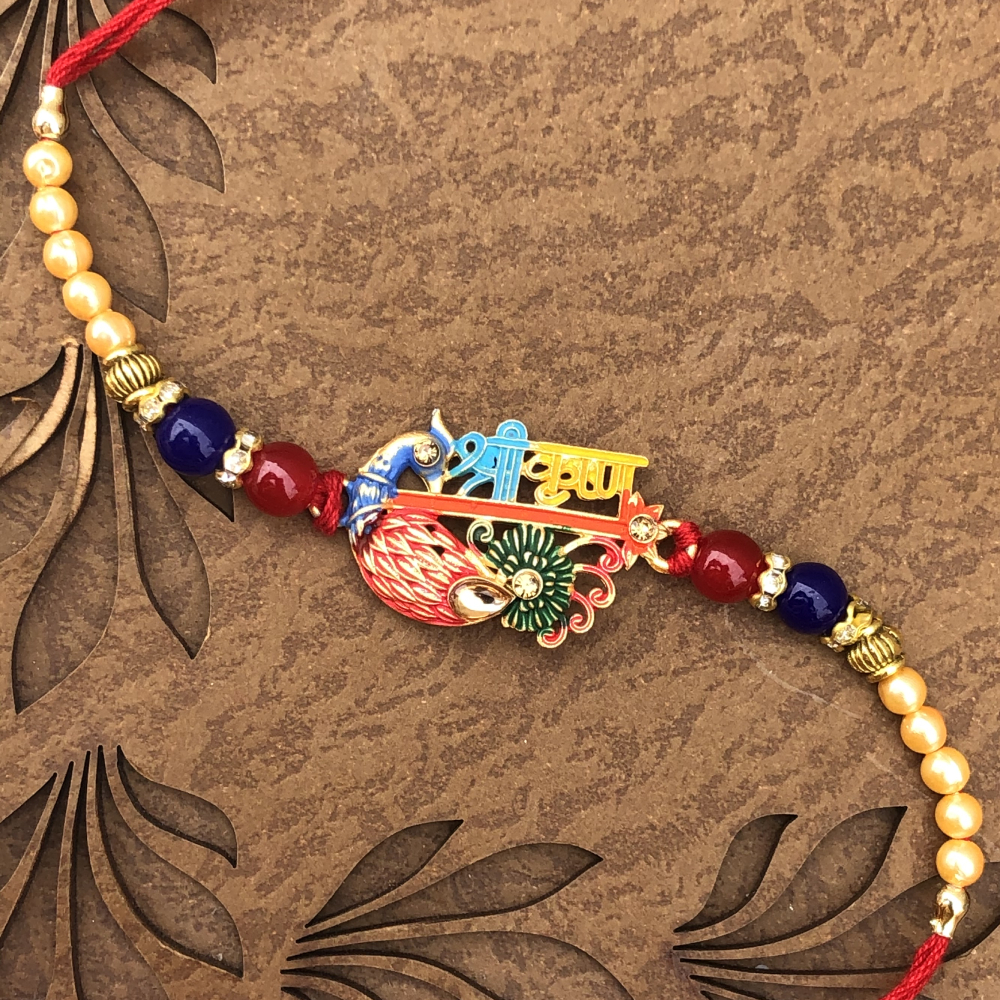 Auspicious rakhi
36% off
rakhiz.com
Auspicious Krishna and Peacock Designer Rakhi
₹180
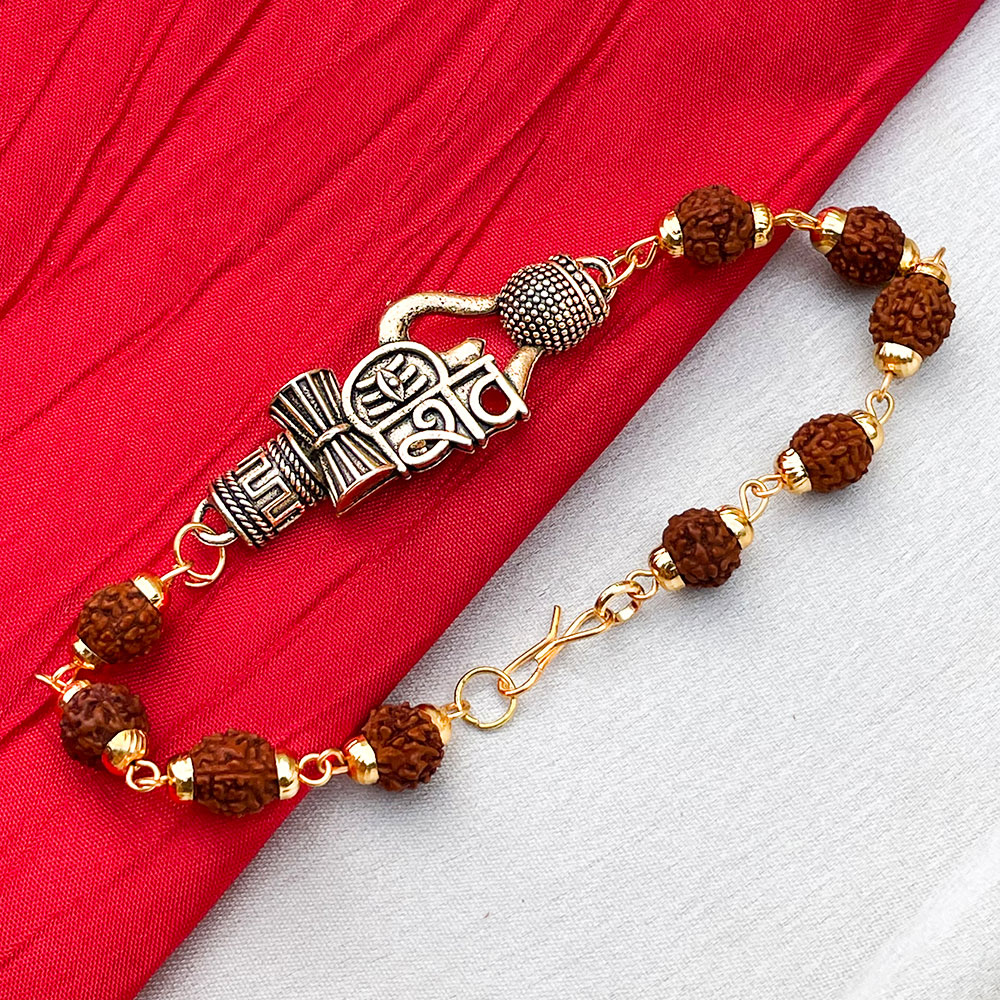 Bracelet rakhi
28% off
rakhiz.com
Rudraksh Shiva Symbol Bracelet Rakhi for Brother
₹260
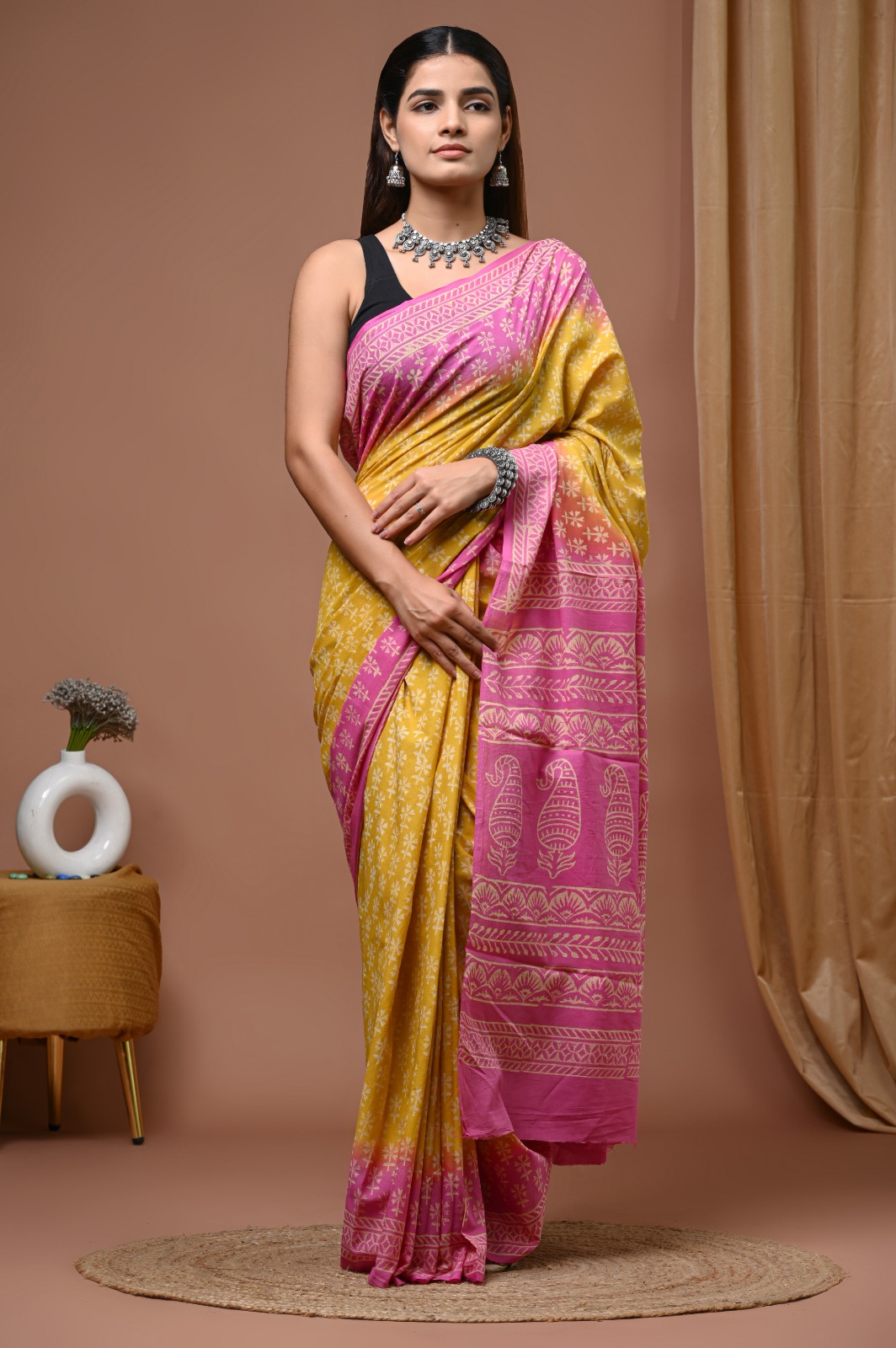 Mulmul saree
46% off
theblockart.com
Sunset Bloom Hand Block Cotton Saree, Yellow and Rani Pink
₹1,190
Thank you. Your answer helps us make this guide better.