Ghewar: the honeycomb sweet of Rakhi and Teej
Why Jaipur's sweet shops fill with ghewar every Shravan, how it is made, plain versus malai, how long it keeps, and why it should not go in a parcel abroad.
Short answer
- Ghewar is a disc-shaped Rajasthani sweet made by pouring a thin batter of maida and ghee into hot ghee, which makes its honeycomb texture. It is then soaked in sugar syrup.
- It is the sweet of Shravan, eaten for Teej and Raksha Bandhan, and hard to find in most shops for the rest of the year.
- Plain ghewar keeps for several days. Malai or rabri ghewar has milk on top and should be refrigerated and eaten within a day or two.
- Don't post ghewar abroad. Malai ghewar contains milk, and milk sweets are stopped at the border in Australia, the EU and other places.
If you walk through Jaipur's old markets in Shravan, you can tell it is Rakhi season from the sweet shops alone. Stacks of ghewar appear in every window, plain ones in tall golden towers, malai ones in trays with a thick layer of rabri on top. Two months later they are gone, and most shops won't make them again until next year.
For a lot of Rajasthani families, the Rakhi thali isn't complete without a piece of ghewar on it. Here is what it is, and how to buy it and serve it well.
What ghewar is
Ghewar is a round, flat sweet, usually the size of a small plate, with a lacy, honeycomb texture. It is crisp at the edges and soft in the middle once it soaks up syrup.
The base is very simple: maida, ghee and cold water or milk, beaten into a thin batter. The skill is in the frying. The halwai sets a deep metal ring in a pan of hot ghee and pours the batter in a thin stream from a height. Each pour hisses and foams, and as the foam settles, it leaves a ring of lacy batter behind. The halwai keeps pouring into the centre, stream after stream, building up the disc layer by layer, until it is golden and full of holes. It is then lifted out, drained and dipped in sugar syrup.
Ghewar is fussy. The ghee has to be at exactly the right heat, and the batter has to be cold. Many halwais say the humid monsoon air helps the texture, which is one explanation for why it is a Shravan sweet. Whatever the reason, it is closely tied to the season.
Why it belongs to Shravan
In Rajasthan, ghewar is first a Teej sweet. Before Hariyali Teej, a married daughter's parents send her a sinjara: a gift of clothes, bangles, mehndi and sweets for her and her in-laws. Ghewar is almost always in it. Two weeks later comes Raksha Bandhan, and the same sweet goes on the rakhi thali.
So for many families, ghewar is the taste of the whole sibling season. Daughters getting it from home at Teej, sisters giving it to brothers at Rakhi. You will find it in Delhi, Agra, Mathura and much of North India now, but Jaipur, Ajmer and the rest of Rajasthan still take it most seriously.
The main kinds
| Kind | What is on top | How long it keeps |
|---|---|---|
| Plain (sada) ghewar | Sugar syrup only, sometimes a few nuts | Several days at room temperature, longer in a dry place |
| Malai or rabri ghewar | A layer of rabri or thickened cream, nuts, often silver varq | Refrigerate, eat within a day or two |
| Mawa ghewar | Mawa (khoya), nuts | Refrigerate, eat within a couple of days |
| Paneer or kesar ghewar | Paneer, or saffron-flavoured cream | Treat like malai ghewar |
| Mini ghewar | Any of the above, in a smaller size | As per the topping |
Sugar-free and "fusion" ghewars (chocolate, fruit) have appeared in the last few years. Some are good. The classic is still malai ghewar with pistachios.
Buying ghewar for Rakhi
- Buy plain, add malai at home. If you are buying a day or two ahead, buy plain ghewar and a separate box of rabri. Spread the rabri on the morning of Rakhi. It tastes fresher, and nothing spoils overnight.
- Look at the honeycomb. Good ghewar has an even, open structure all the way across. A dense, flat middle means the batter or the heat was off.
- Smell the ghee. It should smell of ghee, not of old oil. Pure-ghee ghewar costs more, and you can tell.
- Go early. The good shops in Jaipur have queues on the day before Rakhi. Buying on Rakhi morning itself is a gamble.
Serving it on the day
Ghewar is rich and breaks easily, so cut it on a board with a sharp knife, in wedges like a cake. One wedge per person is plenty. On the thali, a small piece is enough for the sister to feed her brother after tying the rakhi. Our rakhi thali guide covers the rest of the plate.
Leftover plain ghewar is lovely crumbled over a bowl of rabri or kheer, or warmed for a few seconds and eaten with cold milk. Leftover malai ghewar should go in the fridge straight away.
Why not to post it abroad
Every year people ask whether they can send ghewar to a brother overseas. Please don't. Malai ghewar contains milk, and milk-based sweets are some of the items most often seized at borders. Australia's Department of Agriculture lists Indian sweets made with milk among Rakhi gifts that pose a biosecurity risk, and the EU does not allow personal parcels of milk products from outside the EU. Plain ghewar is fragile, oily and sticky after a week in transit, even where it is allowed.
Send the rakhi and a card instead, and ask your brother to buy a sweet near him. Indian sweet shops in London, Toronto, Dubai, Sydney and Singapore often make ghewar in Shravan. Our country guides for Australia and New Zealand and Germany and Europe explain what is and isn't allowed.
The other Shravan sweets
Ghewar isn't the only seasonal sweet. Feeni (a fine, thread-like fried sweet eaten with milk) is a close cousin. Sutarfeni, malpua and, in Maharashtra, narali bhaat (sweet coconut rice) all turn up on Rakhi plates in different parts of India. On the Konkan coast, coconut is the theme of the day, as we wrote in our piece on Narali Purnima.
Frequently asked questions
Ghewar is made from a thin batter of maida, ghee and cold water or milk, poured in streams into hot ghee in a deep ring to create a honeycomb disc, which is then soaked in sugar syrup. Malai ghewar has a layer of rabri or cream on top.
Ghewar is a Shravan sweet in Rajasthan. It is sent to married daughters in the sinjara before Teej and put on the rakhi thali for Raksha Bandhan, and most shops make it only in this season.
Plain ghewar keeps for several days at room temperature in a dry place. Malai, rabri or mawa ghewar contains milk and should be refrigerated and eaten within a day or two.
It is best not to. Malai ghewar contains milk, and milk-based sweets are stopped by biosecurity and food rules in places like Australia and the EU. Send the rakhi and let your brother buy sweets locally.
Picked for this guide
From our family shops in Jaipur. Prices were checked when we picked them; the shop page always shows today's price.
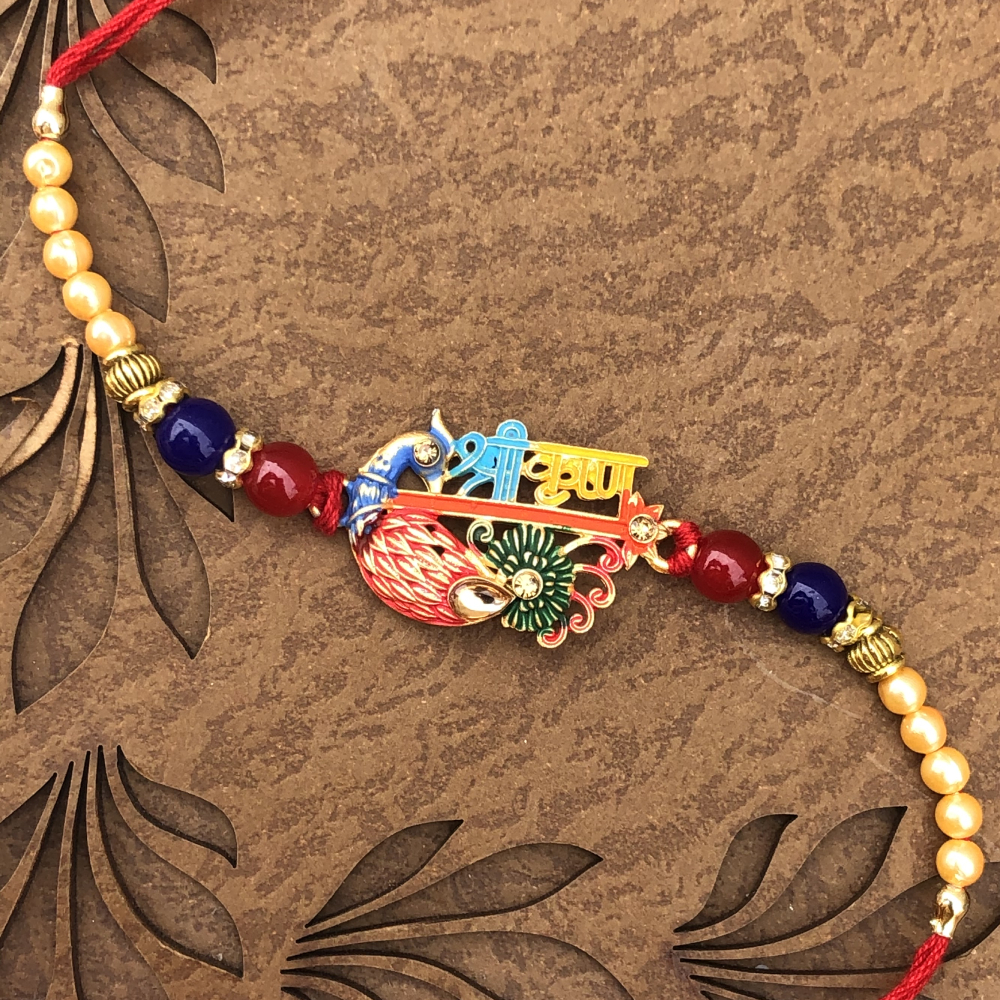 Auspicious rakhi
36% off
rakhiz.com
Auspicious Krishna and Peacock Designer Rakhi
₹180
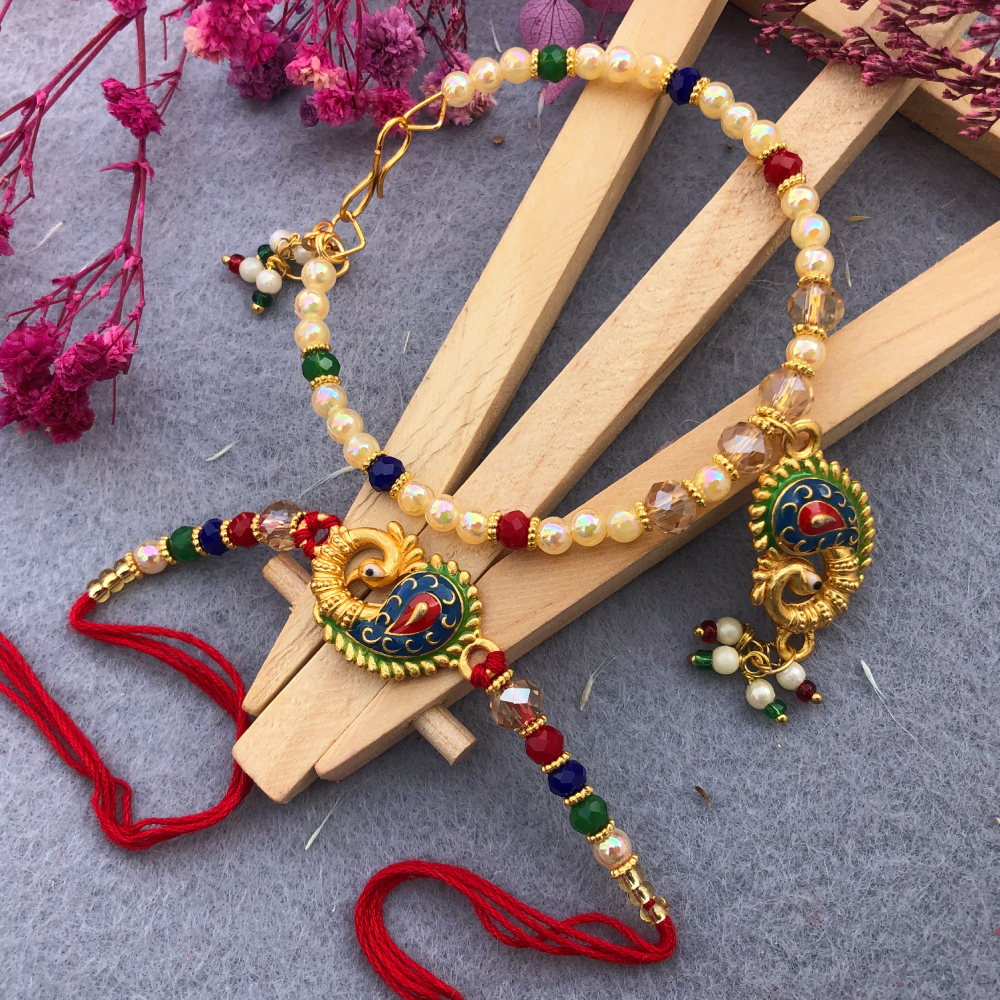 Bhaiya-bhabhi pair
rakhiz.com
Royal Peacock Bhaiya-Bhabhi Rakhi Set
₹370
Shop now
(opens in a new tab)
 Maheshwari silk
18% off
theblockart.com
Hand Block Printed Maheshwari Silk Saree with Golden Border
₹2,450
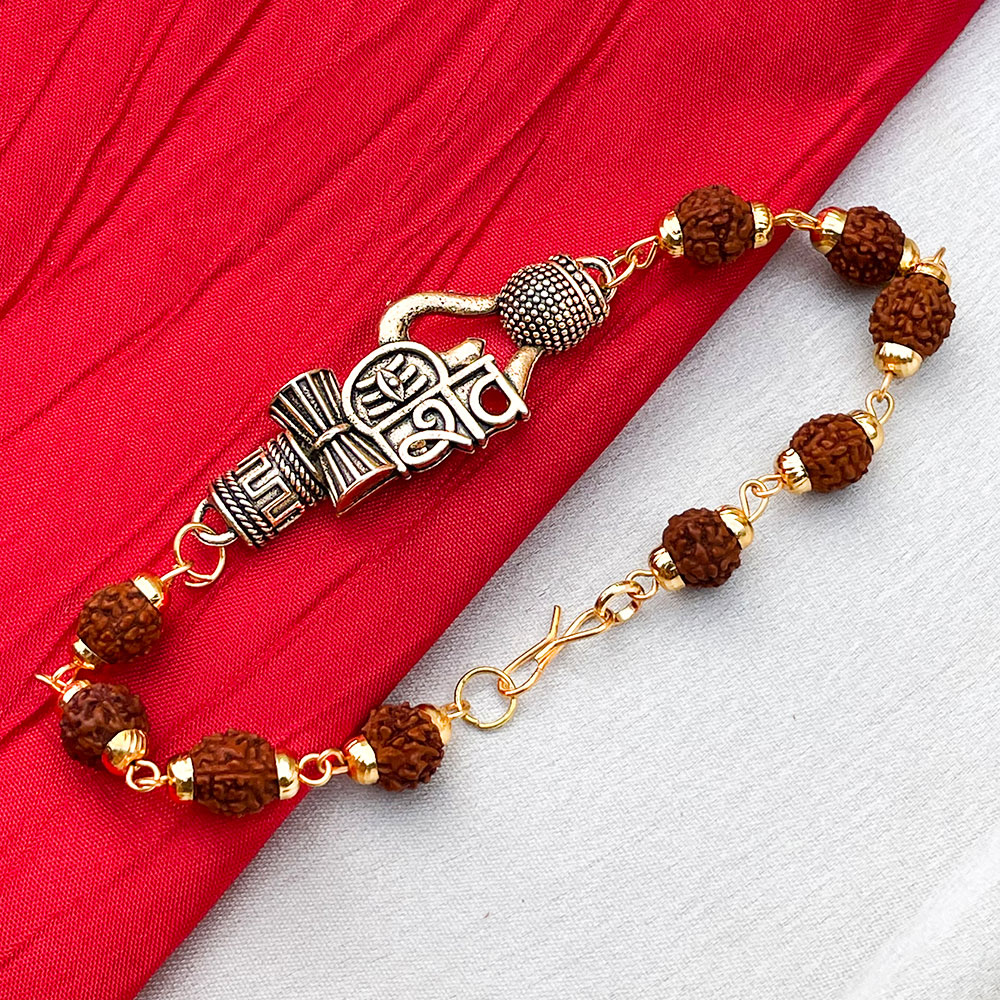 Bracelet rakhi
28% off
rakhiz.com
Rudraksh Shiva Symbol Bracelet Rakhi for Brother
₹260
Thank you. Your answer helps us make this guide better.