Six Raksha Bandhan stories, and what each one is really about
Draupadi's torn sari, a queen's letter to an emperor, a goddess in disguise and a poet in the streets of Calcutta. The stories behind the thread, told plainly.
Short answer
- The best-known story is of Draupadi tying a strip of her sari on Krishna's bleeding finger, and Krishna protecting her later.
- Older texts link the thread to Indra and Sachi, and to Lakshmi tying a rakhi on King Bali.
- Rani Karnavati's rakhi to Humayun is a much-loved tale, but historians treat it as legend rather than record.
- In 1905, Rabindranath Tagore used rakhi to bring Hindus and Muslims together against the partition of Bengal. That one is documented history.
Ask three families where Raksha Bandhan comes from and you will hear three different stories. Everyone has a version. Somebody's grandmother insists that Yamuna was the first sister to tie a rakhi. Somebody else says it was Lakshmi. They are both right, in a way, because Raksha Bandhan did not come from one story. It gathered several over many centuries.
Here are six of them, with a note on where each one comes from. Some are scripture, some are folk tradition, and one is a newspaper headline from 1905.
1. Krishna and Draupadi
This is the one most children hear first. Krishna cut his finger, in some tellings while releasing the Sudarshan Chakra against Shishupala, in others while cutting sugarcane. The queens around him ran to find a cloth. Draupadi did not wait. She tore a strip from the edge of her sari and tied it around his finger to stop the bleeding.
Krishna told her he would repay every thread of that cloth. Years later, when the Kauravas tried to disrobe her in the court of Hastinapur, her sari kept growing, and could not be pulled away.
What it is about: the bond here is chosen, not by birth. Krishna and Draupadi were friends, sakha and sakhi. That is a big part of why many people today tie a rakhi to someone who is family by heart rather than blood.
Where it comes from: the disrobing scene is in the Mahabharata. The torn-sari moment is mostly from later retellings and folk tradition, and it is the version almost every Indian family tells.
2. Indra and Sachi
In the Bhavishya Purana, the gods are losing a long war against the asuras. Indra, their king, is close to defeat. His wife Sachi (Indrani) goes to the guru Brihaspati, who gives her a thread charged with mantras. She ties it on Indra's wrist on Shravan Purnima, and he wins.
What it is about: this is the oldest form of the idea, the thread as a protective charm, a raksha sutra. And notice that it is a wife tying it on her husband, not a sister on a brother. In early practice, priests tied raksha sutras on their patrons too, and in many temples they still do on this day.
3. Lakshmi and King Bali
King Bali, the generous asura king, won such devotion from Vishnu that Vishnu agreed to stay with him and guard his kingdom. That left Lakshmi alone in Vaikuntha. So she went to Bali dressed as a woman with no family, asked for shelter, and on Shravan Purnima tied a thread on his wrist. Bali, touched, asked what she wanted as a gift. She told him who she was and asked for her husband back. Bali kept his word.
What it is about: the brother's promise. Once Bali accepted the thread, he had to give what his sister asked, even at a cost to himself. That is the spirit of the gift that brothers still give today. This story is also why the protective mantra many priests say while tying a rakhi mentions Bali: yena baddho bali raja, "with the thread that bound the mighty King Bali, I bind you".
4. Yama and Yamuna
Yama, the god of death, did not visit his sister Yamuna for twelve years. She was hurt, and she asked Ganga to remind him. When he finally came, she tied a thread on his wrist and fed him. He blessed her and promised that any brother who accepts his sister's thread and blessing would be protected.
Many families tell this story for Bhai Dooj instead, where the sister puts a tilak and feeds her brother. Both days claim it, and both are right in their own homes. We wrote about how the two festivals differ.
What it is about: showing up. The heart of this story is a sister who misses her brother, and a brother who finally comes home.
5. Rani Karnavati and Humayun
This story is loved across India, perhaps because it crosses a line of faith. In 1535, Bahadur Shah of Gujarat attacked Chittor. The widowed queen of Mewar, Rani Karnavati, is said to have sent a rakhi to the Mughal emperor Humayun, asking for help. Humayun accepted it and set out with his army, but arrived too late. Chittor fell, and Karnavati and the women of the fort chose jauhar.
What it is about: a rakhi as a call for help across every divide, accepted because of what the thread meant.
Is it history? The siege of Chittor and Karnavati's jauhar are recorded. The rakhi itself is not mentioned in the chronicles written at the time, and appears in much later accounts, including Colonel James Tod's 19th-century history of Rajasthan. Many historians treat it as legend. We still tell it, and we tell children that it is a story.
6. Tagore and the rakhi of 1905
This one is not a legend at all. On 16 October 1905, the British partition of Bengal came into effect, splitting the province largely along religious lines. Rabindranath Tagore called for a Rakhi Bandhan Utsav on that day. Thousands walked to the Ganga in Calcutta, bathed, and then tied rakhis on each other's wrists, Hindu and Muslim, neighbour and stranger, as a sign that Bengal could not be divided. Tagore wrote a song for the occasion.
The partition was reversed in 1911. The rakhis of 1905 did not do that alone, but they gave the protest a face anyone could join.
What it is about: the thread as a bond between people who are not family at all. It is the same idea that has people today tying rakhis on soldiers, on trees, and on friends.
What the stories have in common
Read them together and a pattern shows up. In almost every story, the thread is tied by someone with less power on someone with more: a wife on a king at war, a guest on a host, a queen under siege on an emperor. And in every story, the stronger one is bound by it. The thread is thin on purpose. It works because the person wearing it chooses to honour it.
That is still how it works. A rakhi does not protect anybody by itself. The promise does.
Telling these stories to children
A few things that work well:
- Tell one story a day in the week before Rakhi, so the festival builds up.
- Start with Krishna and Draupadi. It is short, it has a cut finger, and children understand it straight away.
- For older children, the Karnavati story is a good way to talk about the difference between history and legend.
- Tagore's rakhi is a lovely one for school projects, because it is real and it is about friendship across communities.
If your children are writing about the festival for school, our Raksha Bandhan essay guide has short and long versions.
Frequently asked questions
There are several. The best known is Draupadi tying a strip of her sari on Krishna's cut finger, after which Krishna protected her. Older stories link the thread to Sachi tying it on Indra, and Lakshmi tying it on King Bali.
The siege of Chittor in 1535 and Rani Karnavati's jauhar are historical, but the rakhi is not mentioned in accounts written at the time. It appears in much later writings, so most historians treat it as a legend.
On 16 October 1905, the day the partition of Bengal took effect, Rabindranath Tagore asked people to tie rakhis on each other across Hindu and Muslim communities, as a sign that Bengal stayed united.
Many families and priests say 'Yena baddho Bali raja, danavendro mahabalah, tena tvam pratibadhnami, rakshe ma chala ma chala', which refers to the thread that bound King Bali.
Picked for this guide
From our family shops in Jaipur. Prices were checked when we picked them; the shop page always shows today's price.
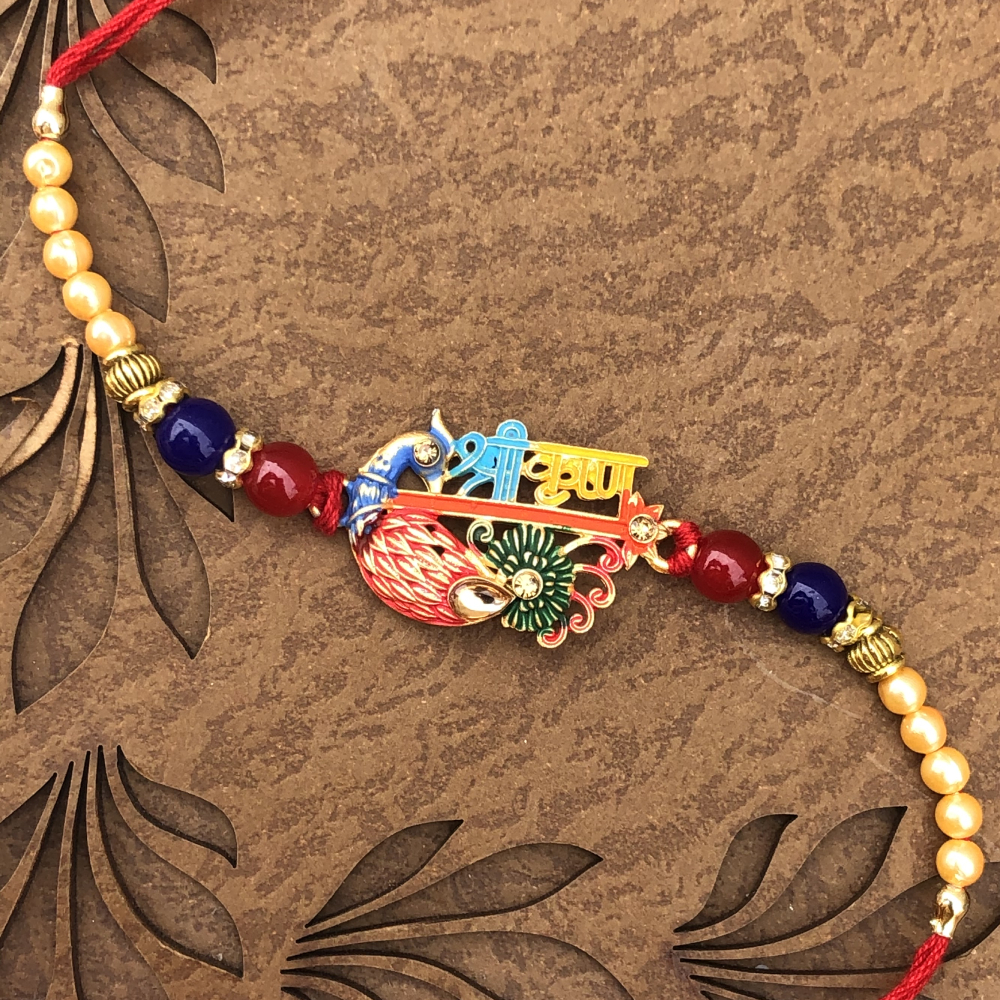 Auspicious rakhi
36% off
rakhiz.com
Auspicious Krishna and Peacock Designer Rakhi
₹180
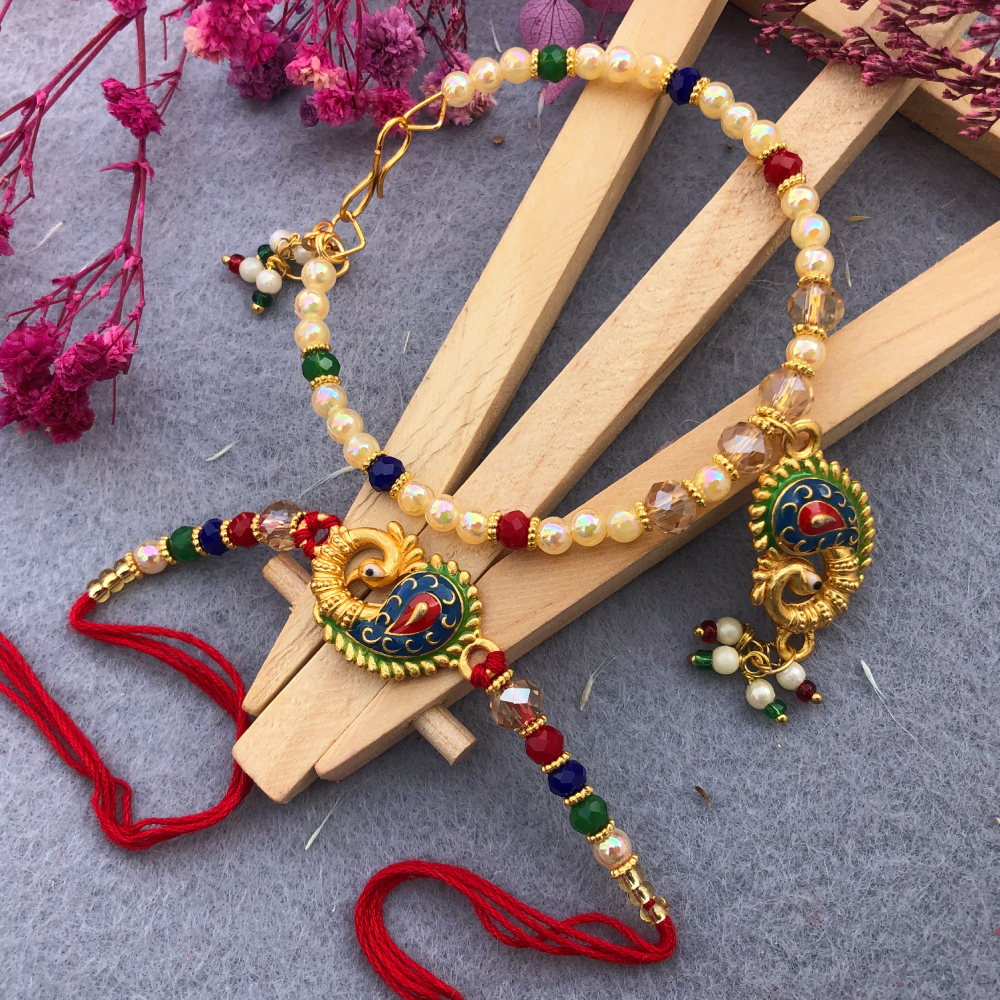 Bhaiya-bhabhi pair
rakhiz.com
Royal Peacock Bhaiya-Bhabhi Rakhi Set
₹370
Shop now
(opens in a new tab)
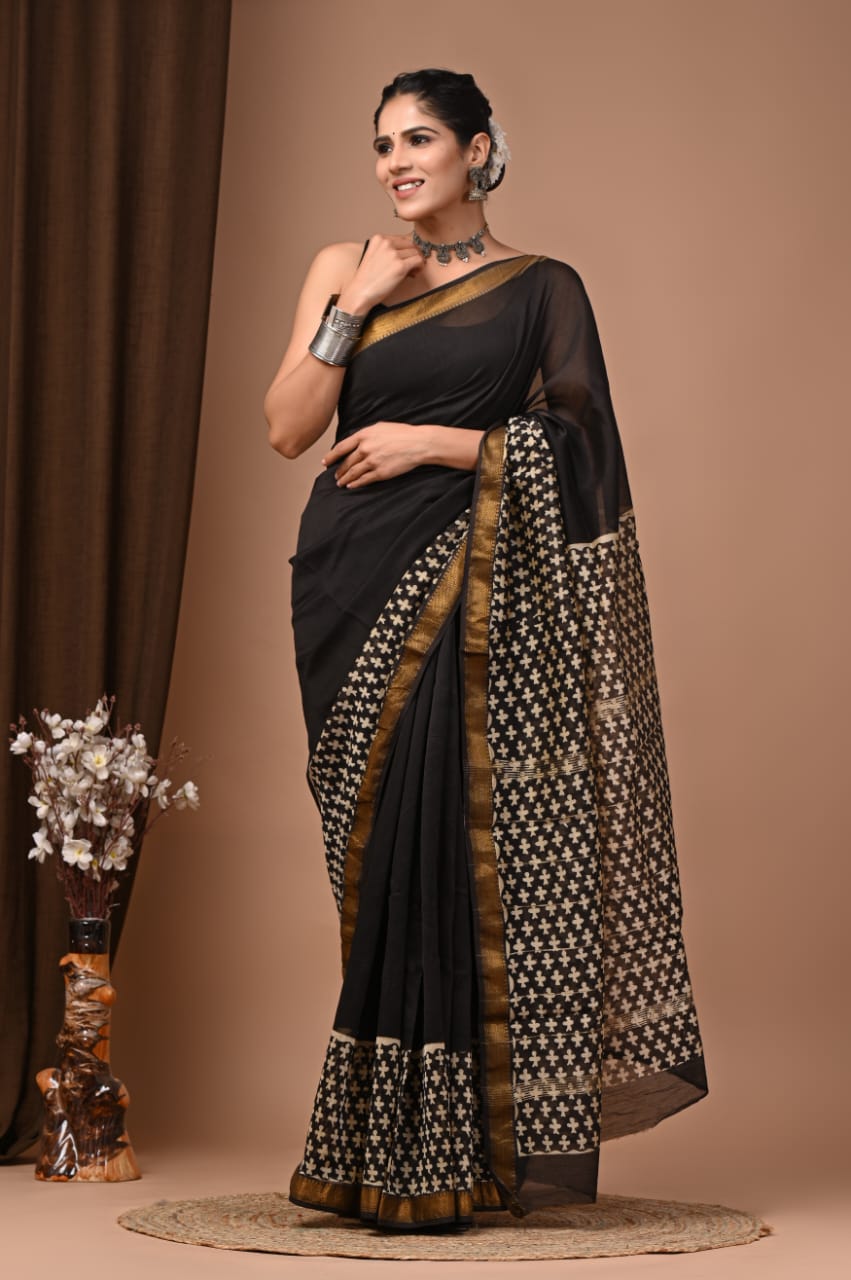 Maheshwari silk
18% off
theblockart.com
Hand Block Printed Maheshwari Silk Saree with Golden Border
₹2,450
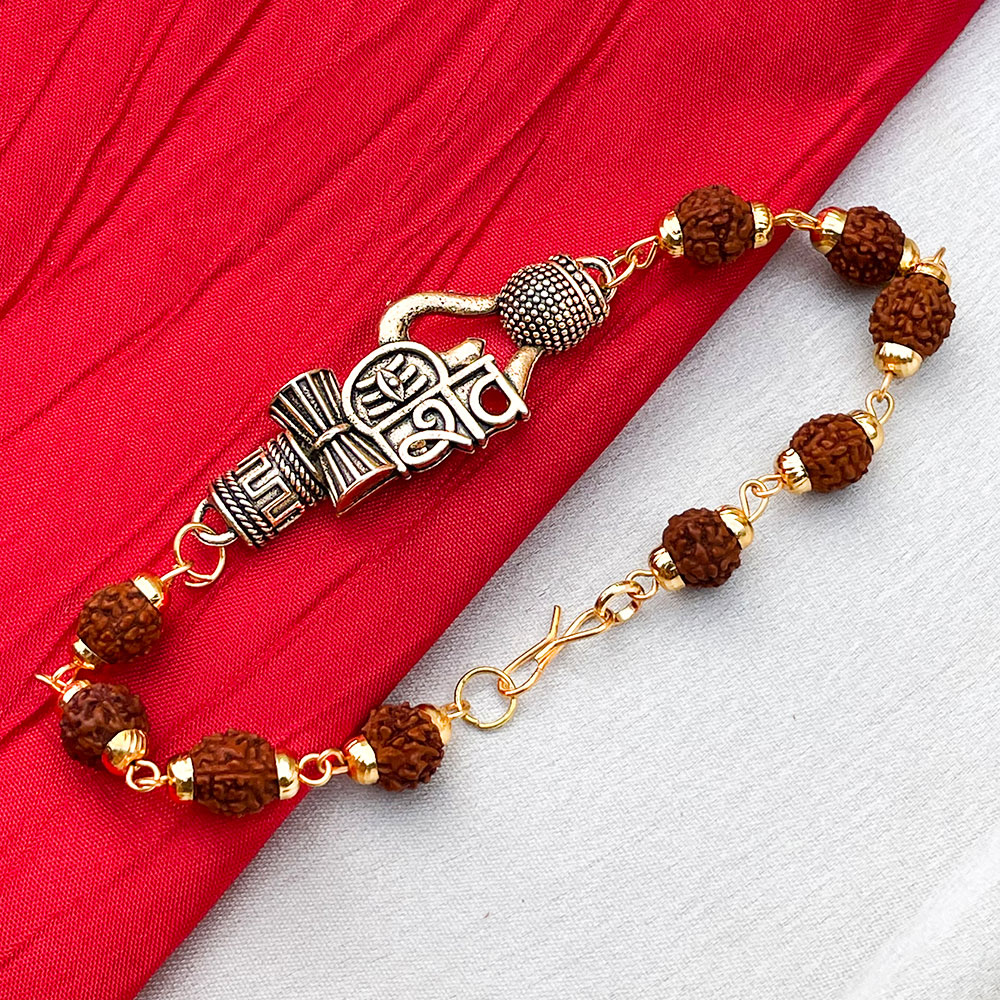 Bracelet rakhi
28% off
rakhiz.com
Rudraksh Shiva Symbol Bracelet Rakhi for Brother
₹260
Thank you. Your answer helps us make this guide better.