Bhai Dooj and Raksha Bandhan: same love, different days
One is about a thread, the other about a tilak and a meal. Here is how the two sibling festivals differ, where each one comes from, and how families keep both.
Short answer
- Raksha Bandhan falls on Shravan Purnima (17 August 2027). The sister ties a rakhi on her brother's wrist.
- Bhai Dooj falls two days after Diwali, on Kartik Shukla Dwitiya (31 October 2027). The sister puts a tilak on her brother's forehead and feeds him.
- Rakhi is about protection and a promise. Bhai Dooj is about the brother's long life, and about him coming home to his sister.
Every October the same question comes up: should I send a rakhi for Bhai Dooj? The honest answer is no, you don't have to. But the question makes sense. Both days are about brothers and sisters, both involve a thali, a tilak and sweets, and in many homes the two have slowly blurred together.
They are still two different festivals, with different moods. If you understand the difference, you can do both well, especially if your brother lives far away and you only get to celebrate one of them in person.
The quick comparison
| Raksha Bandhan | Bhai Dooj | |
|---|---|---|
| When | Shravan Purnima, the full moon of Shravan (July or August) | Kartik Shukla Dwitiya, two days after Diwali (October or November) |
| 2027 date (India) | Tuesday, 17 August | Sunday, 31 October |
| Main ritual | Sister ties a rakhi on the brother's right wrist | Sister puts a tilak on the brother's forehead, does aarti and feeds him |
| Who travels | Traditionally the sister goes to her brother, or sends the rakhi | Traditionally the brother visits the sister's home |
| The promise | The brother promises to protect his sister | The sister prays for her brother's long life |
| Key story | Draupadi and Krishna, Indra and Sachi, Bali and Lakshmi | Yama and his sister Yamuna |
| Timing that matters | Avoid Bhadra kaal | The afternoon (aparahna) window is preferred |
Raksha Bandhan: a thread and a promise
The word itself tells you what the day is about. Raksha is protection, bandhan is a bond, something tied. The sister ties the thread, puts a tilak, offers sweets, and the brother gives her a gift and his word that he will stand by her.
Rakhi falls on Shravan Purnima, so it also overlaps with other full-moon observances. On the west coast it is Narali Purnima, when fishing communities offer a coconut to the sea. In parts of the south it is Avani Avittam, when men change their sacred thread. That is why the Rakhi date and timing get so much attention. Panchangs check whether Bhadra kaal is running that morning. In 2027 Bhadra is over before sunrise, which makes the day easy. Our date and muhurat guide has the full window.
The thread is the point. Families keep it on the wrist for days, sometimes until Janmashtami, and some keep every year's rakhis in a box. Plenty of grown men still have the first rakhi a little sister made at school.
Bhai Dooj: a tilak, a meal and a visit home
Bhai Dooj closes the five days of Diwali. After Dhanteras, Choti Diwali, Lakshmi Puja and Govardhan Puja, the last day belongs to brothers and sisters. There is no thread. Instead the sister puts a tilak of roli and rice on her brother's forehead, does his aarti, and feeds him a proper meal, usually his favourite. He gives her a gift in return.
The story behind it is the story of Yama, the god of death, and his twin sister Yamuna. She invited him home again and again, and he kept putting it off. When he finally came, on this dwitiya, she welcomed him with a tilak and a feast. He was so moved that he gave her a boon: any brother who visits his sister on this day and accepts her tilak would be free of the fear of untimely death. That is why the day is also called Yama Dwitiya, and why the mood is a little different from Rakhi. It is less about the sister's protection and more about the brother's life and health.
Another story ties the day to Krishna. After defeating the demon Narakasura, he went to his sister Subhadra, who welcomed him with a tilak, flowers and sweets.
On Rakhi the sister goes to the brother. On Bhai Dooj the brother comes home to the sister.
One festival, many names
Bhai Dooj changes its name and some of its details as you travel across India and Nepal:
- Bhau Beej in Maharashtra, Goa and parts of Karnataka. Sisters often draw a small square on the floor for the brother to sit in, and the meal is the main event.
- Bhai Phonta in Bengal. The sister puts a phonta (dot) of sandalwood paste with her little finger and recites a rhyme that keeps Yama away. Some sisters fast until the phonta is done.
- Bhai Tika in Nepal, on the last day of Tihar. The tika is in seven colours, and sisters give brothers a garland of makhamali flowers, which hold their colour for a long time.
- Bhathru Dwithiya or Bhagini Hasta Bhojanam in parts of the south, which literally means a meal from the sister's hand.
In Rajasthan, where our workshop is, most families simply say Bhai Dooj, and the tilak and the meal both matter. Kheer or a sweet the brother loved as a child is almost always on the plate.
Do you tie a rakhi on Bhai Dooj?
Traditionally, no. The thread belongs to Shravan Purnima, and the tilak belongs to Kartik Dwitiya. But this has changed in recent years, and it is worth saying so plainly.
Many sisters who could not be with their brother in August now tie a small rakhi or a mauli thread on Bhai Dooj, because it is the day they finally see each other. Families with brothers abroad sometimes send one gift box in October that covers both. Nobody we know thinks this is wrong. Rituals bend to fit families. If you want to keep the two apart, do the tilak and meal on Bhai Dooj and save the rakhi for August.
Timing for Bhai Dooj 2027
In 2027 Diwali (Lakshmi Puja) is on Friday, 29 October, and Bhai Dooj is on Sunday, 31 October in India. Panchangs prefer the aparahna, the afternoon part of the day, for the tilak. The exact window changes by city, so check your local panchang. Some panchangs for the United States list Saturday, 30 October, for the same reason Rakhi can fall a day earlier there: the dwitiya tithi starts at a different local time.
Raksha Bandhan 2027 is on Tuesday, 17 August, and the rakhi can be tied from sunrise until about 12:58 PM IST, when the purnima ends.
If your brother lives far away
For Rakhi, the thread has to travel, so plan the courier around the festival. Our deadline calculator gives a last safe order date for 19 countries. For Bhai Dooj, nothing physical has to arrive. A video call during the tilak time, a sister holding the thali up to the camera, and a meal ordered to his door does the job. Some sisters cook the brother's favourite dish and eat it together on the call, each in their own kitchen.
If you want ideas for doing Rakhi from a distance, read how families celebrate with a brother abroad.
Gifts for each day
Gifts on Rakhi usually go from brother to sister, and on Bhai Dooj in both directions, though again families do it their own way. Since Bhai Dooj comes at the end of Diwali, sweets and dry fruits are everywhere, so a gift that lasts makes more sense. A block-printed dupatta or a cotton saree is a gift that gets used for years. On Rakhi, the sister's gift to the brother is the rakhi itself, and many brothers now give return gifts that are thought out rather than an envelope of cash.
Frequently asked questions
No. Both celebrate brothers and sisters, but Raksha Bandhan is on Shravan Purnima and centres on tying a rakhi, while Bhai Dooj comes two days after Diwali and centres on a tilak, aarti and a meal cooked by the sister.
Bhai Dooj 2027 is on Sunday, 31 October in India, two days after Diwali on 29 October. Some US panchangs list 30 October. The tilak is best done in the afternoon window given in your local panchang.
Traditionally the rakhi is tied only on Raksha Bandhan, and Bhai Dooj uses a tilak. Many families now tie a small rakhi or mauli on Bhai Dooj if they could not meet in August, and that is a family choice.
Traditionally the brother visits his sister's home on Bhai Dooj, following the story of Yama visiting his sister Yamuna. On Raksha Bandhan it is more common for the sister to go to her brother or send the rakhi.
Picked for this guide
From our family shops in Jaipur. Prices were checked when we picked them; the shop page always shows today's price.
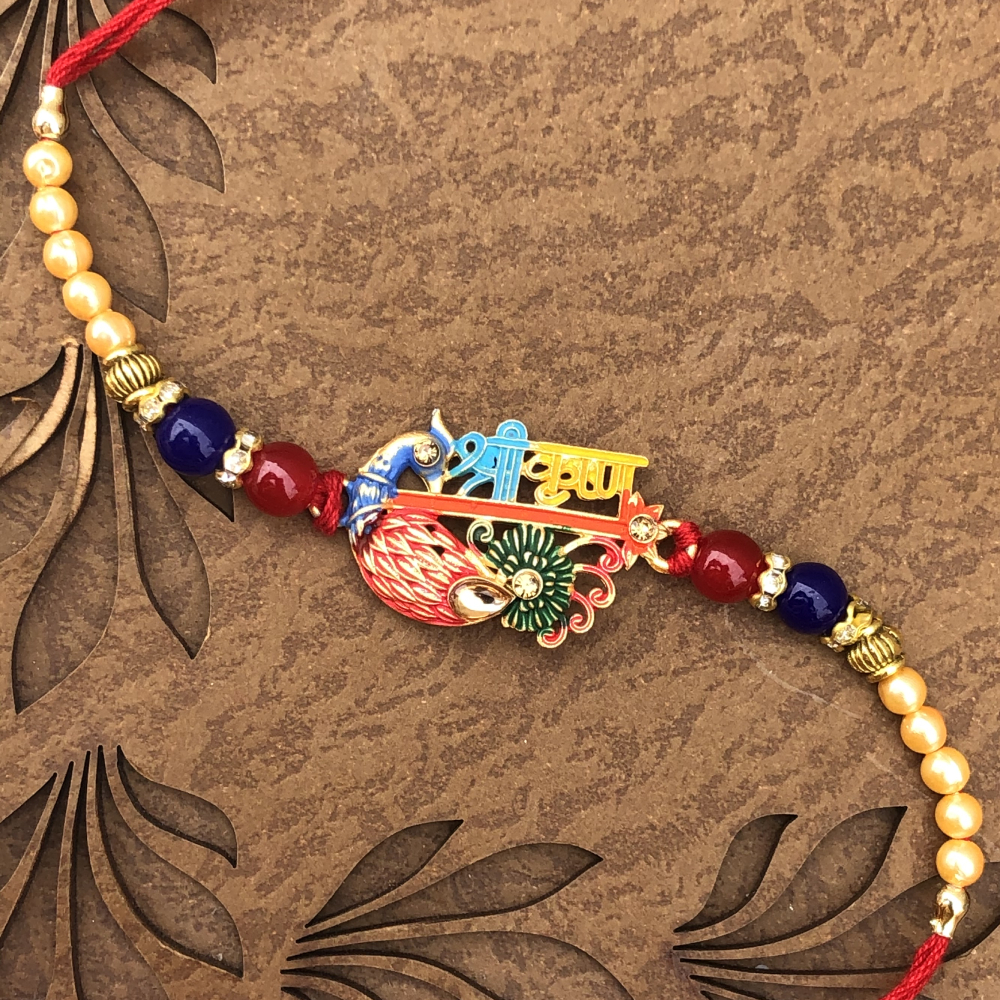 Auspicious rakhi
36% off
rakhiz.com
Auspicious Krishna and Peacock Designer Rakhi
₹180
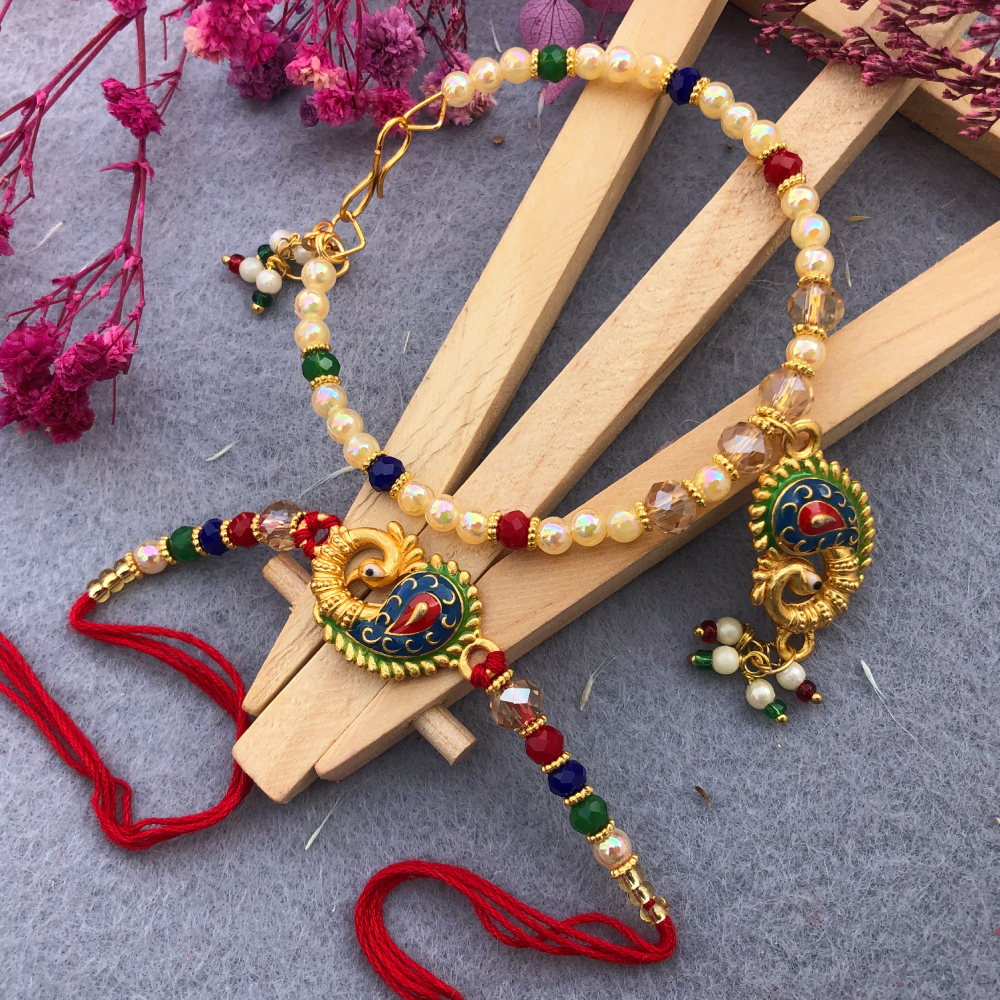 Bhaiya-bhabhi pair
rakhiz.com
Royal Peacock Bhaiya-Bhabhi Rakhi Set
₹370
Shop now
(opens in a new tab)
 Maheshwari silk
18% off
theblockart.com
Hand Block Printed Maheshwari Silk Saree with Golden Border
₹2,450
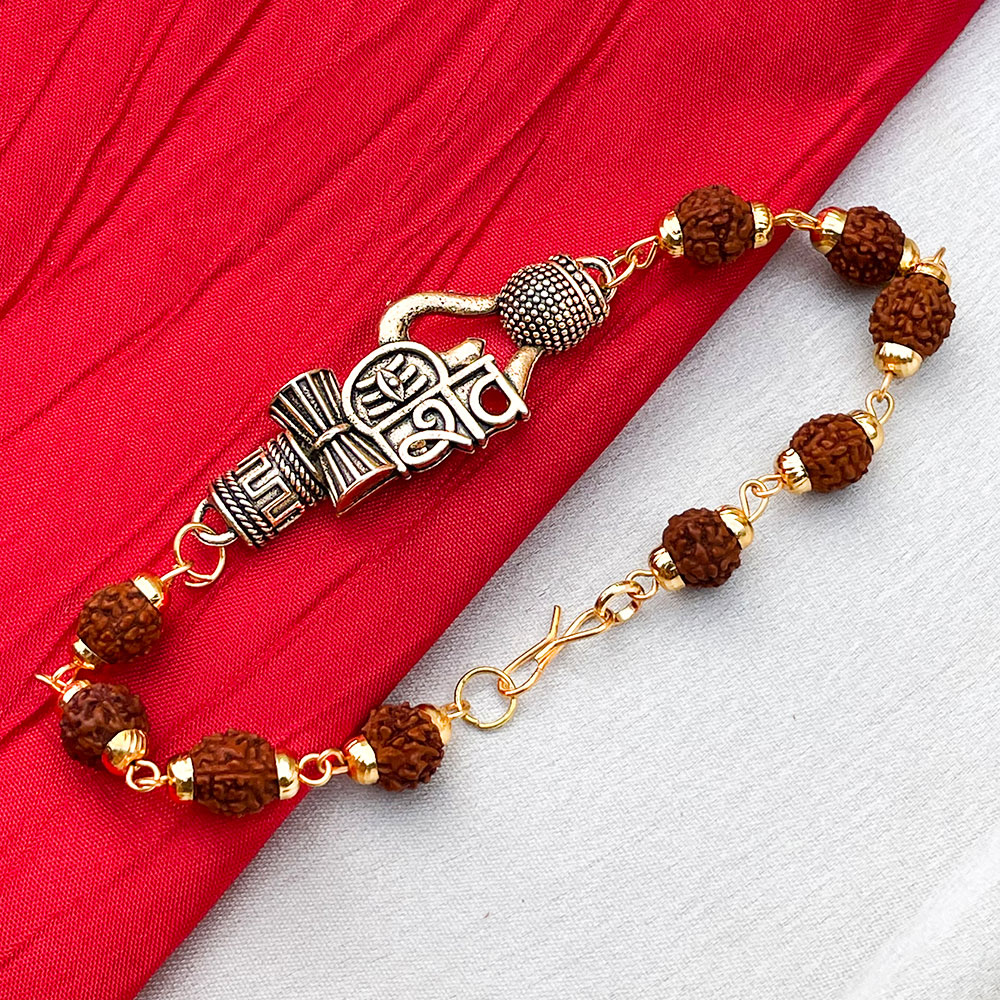 Bracelet rakhi
28% off
rakhiz.com
Rudraksh Shiva Symbol Bracelet Rakhi for Brother
₹260
Thank you. Your answer helps us make this guide better.